

Bird Removal
Bird Removal from Attic, Home, and Business WESTCHESTER, NY
Call (914) 293-7593 for 24/7 emergency NY wildlife removal and prevention.
Noises in the attic? It could be birds!
When removing birds, you have to take into consideration federal laws. All birds are protected by state and/or federal law except pigeons, house sparrows, and European starlings. It is actually against the law to kill almost every other type of bird without a special permit. It is even illegal to cause the death of a protected bird indirectly. It is also against the law to tamper with bird nests if there are eggs or baby birds in them. For this reason, large numbers of bird removals can be very complicated, as any removal/exclusion procedures must be in compliance with these protection laws. Call to learn more about bird removal in Westchester.
Bird Facts
Large bird nest removal, Cortlandt Manor, NY. Bird Removal from Attics.
English Sparrow (Passer Domesticus)
First introduced to this country in Brooklyn, NY, in 1850, sparrows have continued to spread throughout the United States. English sparrows eat primarily grains, with only 4% of their diet coming from insects. However, given the opportunity, they will also feast on discarded food found in garbage. Sparrows breed most of the year. March through August are the most active months. House Sparrows lay between 3 and 7 eggs, with 4–5 being most common. The incubation period takes 10–14 days, with young leaving the nest after approximately 15 days. Call now for more information about bird removal in Westchester.
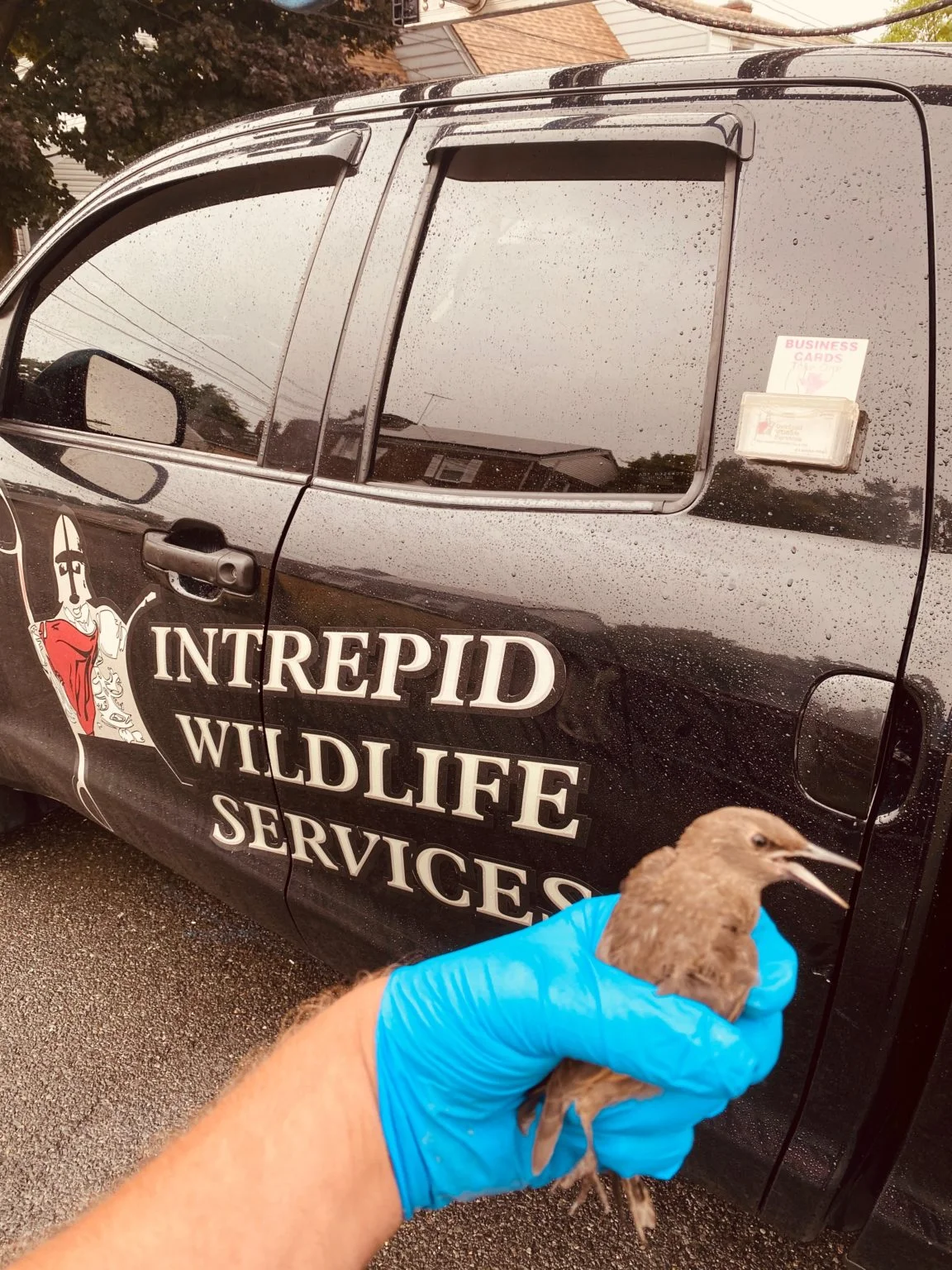
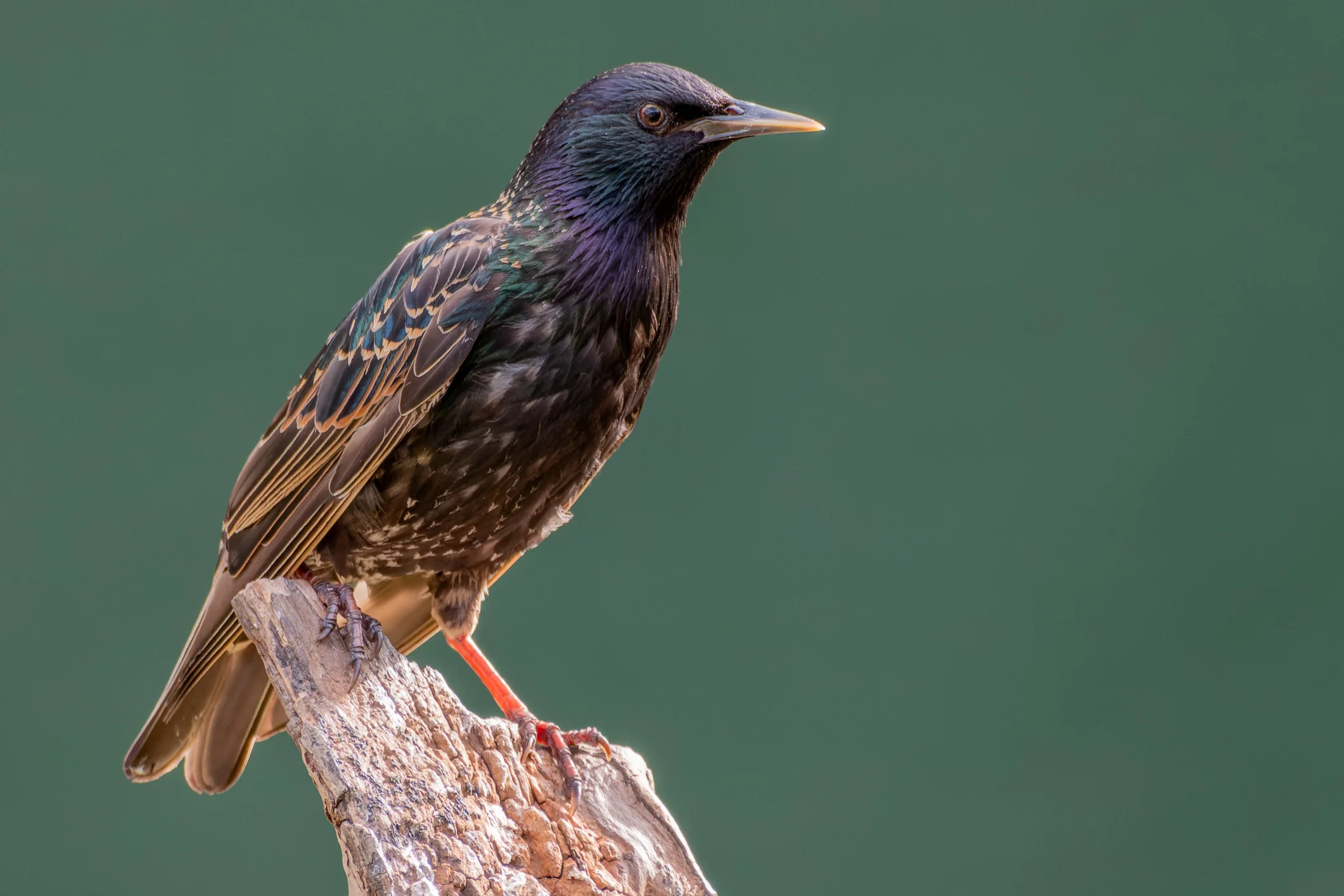
European Starling (Sturnus Vulgaris)
Starlings were first introduced to the United States by Shakespeare enthusiasts in the early 1890s. One hundred starlings were set free in New York City’s Central Park. Now, some 200 million starlings call North America home. According to a Cornell University study, starlings cause $800 million in damages to agriculture annually. Starlings take over nesting cavities used by indigenous birds such as bluebirds and red-headed woodpeckers. As a result, the possibility for these native birds to thrive is reduced. European starlings nest in cubbies, vents, holes in buildings, or any opening that allows for nest building. Four to seven eggs are typically laid, with incubation lasting 11–13 days. Both the male and female build nests and feed young. Starlings leave the nest approximately 21 days after birth. Starlings will nest and have young multiple times per year. Call now for more information about starling removal in Westchester.
Bird Damage
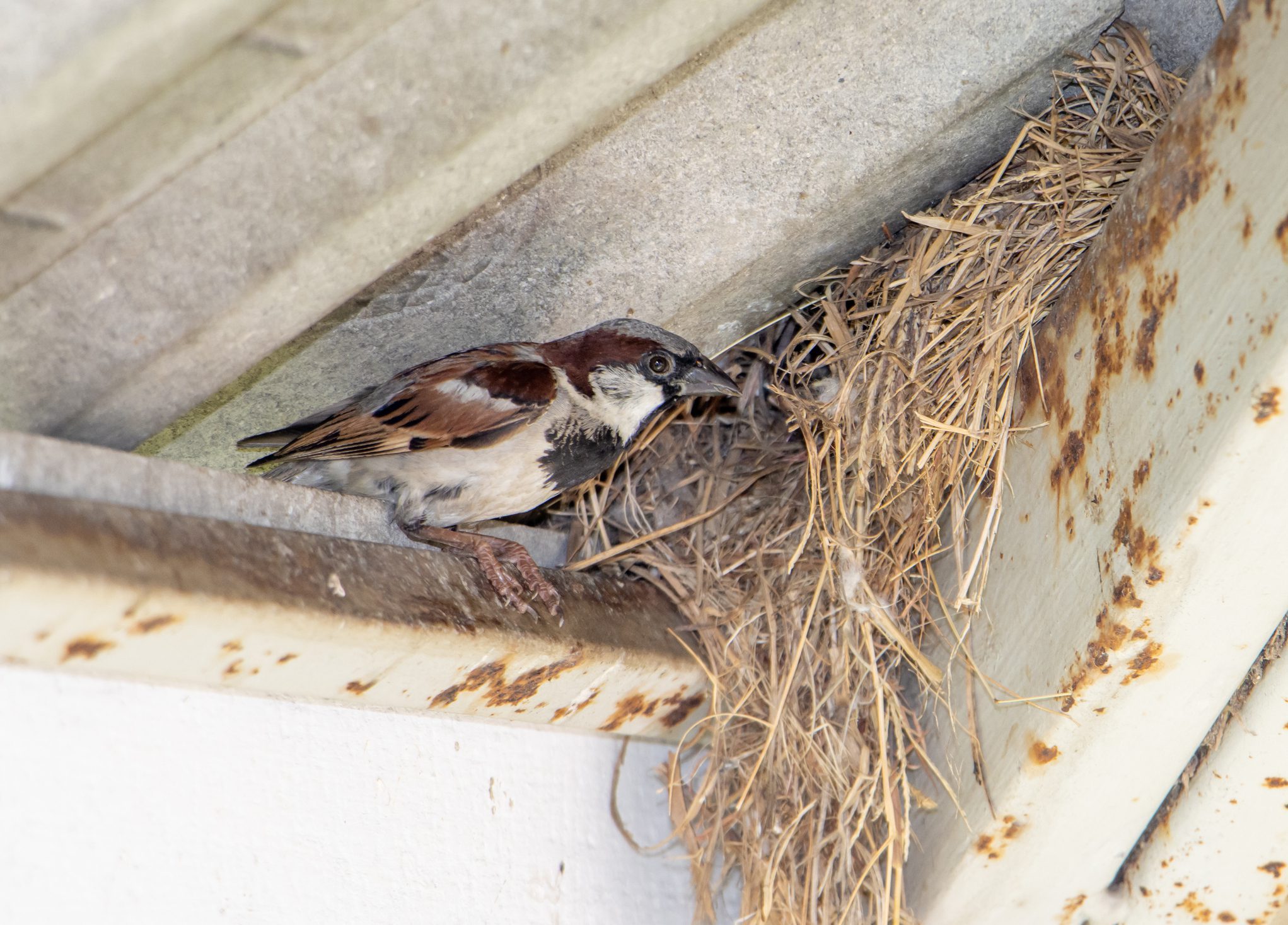
Sparrows will use homes to nest and raise young. Sparrows enter through small gaps or holes leading into walls, attics, or vents. We often remove sparrows and, on occasion, their nests from bathroom vents. English sparrows use any areas that provide them cover for successful nesting: ledges with an overhang, building signage, covered walkways, entryways to buildings… the list is endless.
Sparrows often use retail business signage for nests. English sparrows will build nests on these signs or the support brackets that hold the signs in place. Intrepid Wildlife Services can install a specialized product that will keep birds from nesting and landing on signs. We can also install bird barriers for walkways and overhanging areas.
Health Concerns
House or English sparrows can carry some significant diseases. Some examples are chlamydiosis, coccidiosis, erysipeloid, parathyroid, pullorum, salmonellosis, gastroenteritis, tuberculosis, various encephalitis viruses, internal parasites, acariasis, schistosomiasis, taeniasis, toxoplasmosis, and trichomoniasis. Some of these insects also carry bedbugs, carpet beetles, cloth moths, fleas, ticks, lice, and mites.
Starlings nest in bathroom dryer vents, gable vents, and any hole that allows enough space to nest. Their nesting material is generally made from grass, which is a significant fire hazard. Starlings carry bird mites, transmissible gastroenteritis, and other diseases. The starlings' droppings can also be hazardous to humans.
Bird Removal
Our bird removal protocols are specific to individual problems. We get rid of birds with specialized one-way doors that allow birds to exit the entry holes. Birds using the inside of buildings can be captured with specialty traps and/or nets. The species of bird being excluded sometimes changes our methods, but not always.
Bird Prevention
Intrepid Wildlife Services will identify the problem associated with the sparrows, whether it’s feeding locations or nesting areas. We will modify the habitat by closing holes that allow entry into a house or building. Any birds, nesting materials, and nests will be removed, and the vulnerable area closed to prevent re-entry. Over bathroom vents, we can install protective vent covers.
If you are having starling or other bird problems, the solution is a phone call away. Intrepid Wildlife Services has years of experience removing birds safely and effectively. Intrepid Wildlife Services can provide permanent solutions for bird and numerous other wildlife problems. Each problem may have a different solution and vary depending on the species and nature of the issue. Call us today for the best in bird removal in Westchester.
Birds in the Attic
Bird droppings in the attic and on window sills give an indication of how long they’ve been inside the structure. Nests in the attic are common to not only birds but also squirrels and some other rodents. All pest bird types should be removed as soon as possible to avoid long-term damage and health concerns. Look to the pros at Intrepid Wildlife Services for all of your bird control needs.